


Automotive Coolant Market Overview
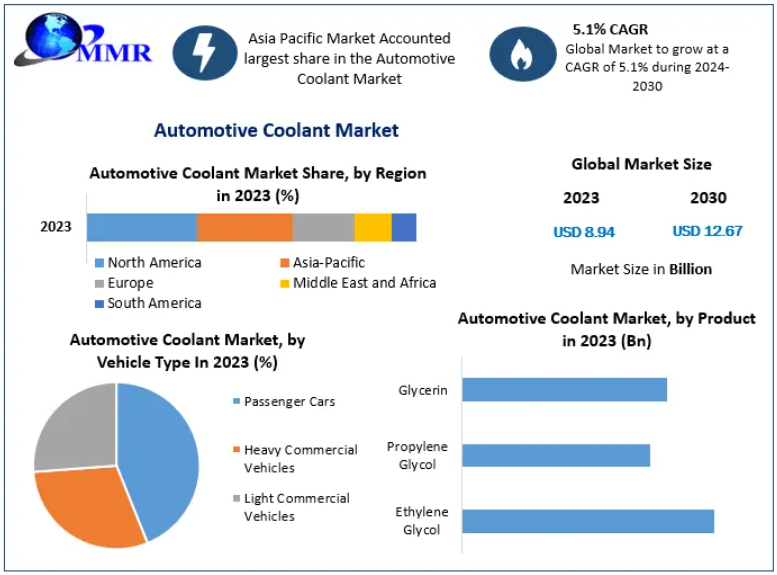
The Automotive Coolant Market plays a vital role in maintaining vehicle engine efficiency and durability by regulating operating temperatures under varying driving conditions. The market was valued at USD 8.94 Billion in 2023 and is projected to reach USD 12.67 Billion by 2030, growing at a CAGR of 5.1% from 2024 to 2030.
Automotive coolant, commonly referred to as antifreeze, is a specially formulated fluid that circulates through the engine cooling system to absorb excess heat and prevent overheating. Typically produced using ethylene glycol, propylene glycol, or glycerin, coolants are designed to protect engines from extreme temperatures, corrosion, and scale formation. Their distinctive coloration—green, blue, pink, or orange—helps in easy identification and maintenance.
Rising global vehicle production, particularly in SUVs, light trucks, and commercial vehicles, along with the increasing number of vehicles in operation, is driving sustained demand for automotive coolants. Growth in vehicle usage and higher annual mileage are also boosting demand from the automotive aftermarket, where routine maintenance and coolant replacement are essential for long-term engine performance.
𝐃𝐨𝐰𝐧𝐥𝐨𝐚𝐝 𝐅𝐫𝐞𝐞 𝐏𝐃𝐅 𝐁𝐫𝐨𝐜𝐡𝐮𝐫𝐞:https://www.maximizemarketresearch.com/request-sample/11151/
Automotive Coolant Market Scope
The Automotive Coolant Market report offers a comprehensive assessment of industry performance, growth opportunities, and competitive dynamics across global and regional markets. The scope of the study includes detailed analysis based on vehicle type, product formulation, technology type, end user, application, and geography.
The report evaluates evolving industry trends such as the shift toward environment-friendly and bio-based coolants, advancements in coolant chemistry, and the impact of electrification on traditional engine cooling systems. It also examines the role of regulatory standards, recycling challenges, and innovation in thermal management technologies.
Regional coverage includes North America, Europe, Asia Pacific, South America, and the Middle East & Africa, with insights into production trends, consumption patterns, and regional manufacturing advantages. The study is designed to assist OEMs, lubricant manufacturers, investors, distributors, and policymakers in making informed strategic decisions.
Automotive Coolant Market Research Methodology
The market analysis is developed using a robust and multi-layered research methodology combining primary and secondary research techniques to ensure high data accuracy and reliability.
Primary research includes interviews and discussions with coolant manufacturers, raw material suppliers, distributors, OEMs, aftermarket players, and investors, providing first-hand insights into market trends, demand patterns, and technological developments.
Secondary research involves the study of company annual reports, press releases, government publications, industry associations, and trusted paid databases such as Bloomberg and Hoovers. Data from both organized and unorganized market participants has been considered to present a holistic industry view.
Market size estimation follows a bottom-up approach, where production volumes, consumption trends, and import–export data are analyzed at country and segment levels. The findings are validated using data triangulation methods, ensuring consistency across volume and value estimations.
Automotive Coolant Market Segmentation Analysis
By Vehicle Type
The market is segmented into:
- Passenger Cars
- Light Commercial Vehicles
- Heavy Commercial Vehicles
- Others
The passenger car segment is expected to hold a dominant share during the forecast period, driven by rising demand for hatchbacks, SUVs, crossovers, and executive-class vehicles, particularly in densely populated countries such as China, India, and Brazil. Increasing preference for personal mobility and higher disposable incomes are further supporting segment growth.
By Product
Based on product type, the market is divided into:
- Ethylene Glycol
- Propylene Glycol
- Glycerin
Glycerin is expected to gain significant traction due to its bio-based origin and potential as an alternative coolant base. Derived as a by-product of biodiesel production, glycerin and 1,3-propanediol (PDO) are being explored for their enhanced thermal stability and corrosion resistance, especially in commercial and off-road vehicles.
By Technology
The market includes:
- Inorganic Acid Technology (IAT)
- Organic Acid Technology (OAT)
- Hybrid Organic Acid Technology (HOAT)
Organic Acid Technology (OAT) is witnessing strong adoption due to its superior corrosion protection, extended engine life, and high-temperature aluminum protection, making it suitable for modern engines.
By End User
- Original Equipment Manufacturers (OEMs)
- Automotive Aftermarket
Growth in the aftermarket segment is driven by increasing vehicle lifespan, rising maintenance awareness, and higher vehicle usage rates globally.
By Application
- Engine Coolant
- HVAC Coolant
- Engine Lubricant
- Brake Lubricant
- Transmission Lubricant
𝐃𝐨𝐰𝐧𝐥𝐨𝐚𝐝 𝐅𝐫𝐞𝐞 𝐏𝐃𝐅 𝐁𝐫𝐨𝐜𝐡𝐮𝐫𝐞:https://www.maximizemarketresearch.com/request-sample/11151/
Automotive Coolant Market Regional Insights
Asia Pacific
Asia Pacific is expected to account for the largest share of the automotive coolant market, supported by high vehicle production volumes in China, India, and Japan, along with cost-effective manufacturing and abundant labor availability. India, in particular, is witnessing rapid growth due to rising passenger vehicle demand, infrastructure development, and expansion of small and medium-sized enterprises.
The presence of public sector and private oil companies such as IOCL, BPCL, HPCL, and RIL is strengthening domestic ethylene glycol availability, supporting local coolant manufacturing and reducing import dependence.
North America
The North American market is driven by a strong automotive aftermarket, high vehicle ownership, and demand for premium and long-life coolant formulations.
Europe
Europe’s market growth is supported by stringent emission regulations, technological innovation, and increasing focus on sustainable automotive fluids.
South America and Middle East & Africa
These regions are witnessing gradual growth due to expanding automotive production bases, improving infrastructure, and rising vehicle parc.
Automotive Coolant Market Key Players
The market is characterized by the presence of global oil majors, lubricant manufacturers, and regional players competing through product innovation, sustainability initiatives, and strategic partnerships.
Key Market Players Include:
- Castrol Limited
- Exxon Mobil Corporation
- Royal Dutch Shell plc
- Chevron Corporation
- British Petroleum (BP)
- TotalEnergies SE
- Valvoline
- Sinopec Lubricant Company
- Ashland Corporation
- Lukoil
- Petronas
- Motul
- Amsoil
- Havoline
- Kost USA
- Bluestar Lubrication Technology
These companies are focusing on bio-based coolants, extended-life formulations, and advanced thermal management solutions to strengthen their market position.
References:
Street name for anabolic steroids
References:
https://aryba.kg/user/juicecell12/
References:
Interesting facts about anabolic steroids
References:
https://erikaschneider.ch/Blog-im-Licht/index.php/;focus=HSTPTP_com_cm4all_wdn_Flatpress_6287624&path=&frame=HSTPTP_com_cm4all_wdn_Flatpress_6287624?x=entry:entry220215-093206%3Bcomments:1
References:
Bulking stacks supplements
References:
https://jasminsideenreich.de/Blog/index.php/;focus=STRATP_com_cm4all_wdn_Flatpress_7099662&path=&frame=STRATP_com_cm4all_wdn_Flatpress_7099662?x=entry:entry221031-092258%3Bcomments:1
References:
Catalina island casino
References:
https://pads.jeito.nl/s/vbH4dWAI4y
References:
Nährstoffe für Testosteron
References:
https://output.jsbin.com/nayiyahiza/
References:
Testosteron Tabletten pflanzlich
References:
https://bendsen-sargent-2.federatedjournals.com/risikoinformationen-testosteronhaltige-arzneimittel-moglicher-hinweis-auf-die-anwendung-ausserhalb-der-zugelassenen-indikation
References:
Is anavar legal
References:
http://gsoot.co.kr/bbs/board.php?bo_table=sub07_02&wr_id=41817
References:
Steroid masteron
References:
https://talentfrontiers.ph/employer/buy-clenbuterol-200mcg-ml/
References:
What effect can the use of steroids have on men
References:
https://fancybox.qa/2026/04/06/can-you-buy-hgh-a-guide-to-safe-and-legal-purchases/
References:
Kakt duschen Testosteron
References:
https://oiaedu.com/forums/users/needvirgo5/
References:
Legal form store
References:
https://md.inno3.fr/s/uD1XE04wG
References:
Legal form store
References:
https://md.inno3.fr/s/uD1XE04wG
References:
Legal form store
References:
https://md.inno3.fr/s/uD1XE04wG
References:
Anabolic steroids for horses
References:
http://jobs.emiogp.com/author/handlecrop0/
References:
Www legal steroids com
References:
https://telegra.ph/7-Best-Keto-Diet-Pills-in-2023-Top-Ketogenic-Supplements-02-05
References:
Where can i get steroids to build muscle
References:
https://a-taxi.com.ua/user/railparcel9/
References:
Dbol steroid pills
References:
https://jacobsen-woodard.hubstack.net/buy-steroids-online-usa
References:
Buying steroids in canada
References:
https://peatix.com/user/28796956
References:
Steroid.com reviews
References:
https://firsturl.de/r2Py9n4
References:
Anabolic steroid forums
References:
https://gaiaathome.eu/gaiaathome/show_user.php?userid=1841239
References:
Best bulking steroids
References:
https://digitaltibetan.win/wiki/Post:Quels_aliments_consommer_pour_booster_et_augmenter_la_testostrone
References:
The truth about steroids
References:
https://pad.stuve.de/s/MuicQRSAo
References:
Where to buy anabolic steroids online
References:
http://www.bluelightbride.com/member.php?action=profile&uid=959375
References:
Type of steroids
References:
https://sibze.ru/index.php?subaction=userinfo&user=dropbass1
References:
Fast muscle steroids
References:
https://a-taxi.com.ua/user/collarcrow2/
References:
Where can i buy illegal steroids
References:
https://enouvelles.top/item/604898
References:
Can you drink alcohol while taking steroids
References:
https://healthjobslounge.com/employer/how-to-take-clenbuterol-for-maximum-results-liquid-drops/
References:
Health risks of anabolic steroids
References:
https://historydb.date/wiki/Legale_Steroide_Legaler_Anabolikaersatz
References:
Merkur Online Casino Echtgeld
References:
https://www.udrpsearch.com/user/ideabelief8
References:
Merkur Online Casino Echtgeld
References:
https://www.udrpsearch.com/user/ideabelief8
References:
Online Casino Echtgeld Gewinn
References:
https://monjournal.top/item/485389
References:
Online Casino Echtgeld Gewinn
References:
https://monjournal.top/item/485389
References:
Online Casino Echtgeld Apple Pay
References:
https://classifieds.ocala-news.com/author/denimtuna45
References:
Testosterone withdrawal side effects
References:
https://onlinevetjobs.com/author/crimestem19/
References:
Bester Echtgeld Casino Bonus
References:
https://baby-newlife.ru/user/profile/524698
References:
Bester Echtgeld Casino Bonus
References:
https://baby-newlife.ru/user/profile/524698
References:
Massive muscle supplement
References:
https://yogicentral.science/wiki/Trenbolone_Buy_Online_Safely_Legally
References:
Cost of trenbolone
References:
https://mozillabd.science/wiki/Buy_Trenbolone_Secure_Online_Purchase_Guide
References:
Testosterone boosters
References:
https://historydb.date/wiki/Testosterone_Injections_Available_Online
References:
Bodybuilding steroid use
References:
https://hackmd.okfn.de/s/HJVJVev2bl
References:
Trenbolone buy
References:
https://notes.bmcs.one/s/yJLRqm4nGB
References:
Microgaming casinos
References:
https://topsitenet.com/profile/sliceblow47/1617858/
References:
Side effects of taking steroids for bodybuilding
References:
https://pad.geolab.space/s/h4Gw0rpIC
References:
Casino hollywood
References:
https://laredadainfo.com/resumen-de-las-noticias-mas-relevantes-del-17-de-marzo/
References:
Lumiere casino st louis
References:
https://cpdbouvxc3m7.blog.fc2.com/blog-entry-265.html
References:
Island casino
References:
https://graph.org/Casino-Online-Your-Ultimate-Guide-to-Playing-04-20
References:
Skycrown https://graph.org/Treasury-Casino-Complete-Guide-to-Games–Bonuses-04-20 australia login
References:
Hinckley mn casino
References:
https://red-stag-casino.online-spielhallen.de/
References:
Pompeii story
References:
https://aria-hotel-and-casino.online-spielhallen.de/